Walnut Moth: A Graceful Script for Elegant Design
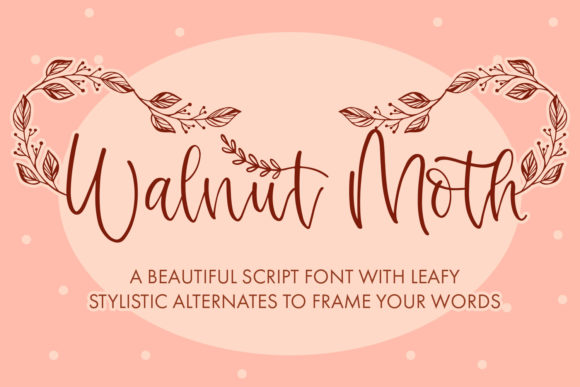
Walnut Moth is a distinctive script font that captures the essence of natural elegance with its flowing, organic form. Designed for those who seek a refined and personalized touch in their visual communication, this typeface stands out for its fluidity and expressive character. Whether used in wedding invitations, business cards, or digital content, Walnut Moth brings a sense of sophistication that feels both timeless and modern.
Understanding the Appeal of Walnut Moth
At its core, Walnut Moth is a handwritten-style font that mimics the subtle irregularities of real penmanship. This makes it ideal for projects where a humanized, authentic feel is desired. Unlike rigid, mechanical fonts, Walnut Moth features a varying baseline and smooth, connected strokes that create a sense of movement and grace. Its glyphs are carefully crafted to maintain consistency while allowing for a natural, artistic flow.
The font’s design emphasizes aesthetics without sacrificing readability. Each letterform is balanced, with attention paid to spacing and proportion. This ensures that even in larger sizes, the typeface remains legible and visually appealing. For designers looking to add a personal or artisanal touch, Walnut Moth offers a compelling alternative to more conventional scripts.
Key Characteristics and Practical Value
One of the standout features of Walnut Moth is its versatility. It supports a wide range of characters, including uppercase and lowercase letters, numbers, punctuation, and special symbols. This makes it suitable for various applications, from short headlines to longer blocks of text. The font also includes alternate glyphs, which allow for creative variation and customization depending on the project’s needs.
Its smooth lines and elegant curves make it particularly well-suited for branding, marketing materials, and editorial design. The font’s ability to convey warmth and authenticity can help brands connect more deeply with their audience. For instance, a small business owner might use Walnut Moth on a logo to communicate craftsmanship and care, while a designer could apply it to a greeting card to evoke a sense of intimacy and thoughtfulness.
Performance in Real-World Applications
In practical use, Walnut Moth performs reliably across different mediums. On print materials, its detailed strokes and consistent spacing ensure a clean, professional appearance. When used digitally, the font maintains clarity at various sizes, making it adaptable for web design, social media graphics, and email templates. Its adaptability is further enhanced by the availability of multiple weights and styles, allowing for greater flexibility in composition.
However, it’s important to note that the font’s aesthetic may not suit every project. Its ornate nature can be overwhelming in large amounts of text, and it may not align with minimalist or highly functional design approaches. In such cases, it’s best used as a highlight or accent rather than the primary typeface.
Who Benefits Most from Walnut Moth?
Walnut Moth is particularly valuable for professionals in creative industries, such as graphic designers, marketers, and content creators. Entrepreneurs and small business owners who want to establish a unique brand identity can benefit from its expressive qualities. Educators and publishers may find it useful for creating visually engaging materials that stand out from standard typography.
Freelancers and hobbyists working on personal projects, such as handmade cards or custom illustrations, will also appreciate the font’s artistic potential. Its ability to add a handwritten touch can elevate the perceived value of a product or message, making it a go-to choice for those who prioritize aesthetics and emotional resonance in their work.
Quality, Usability, and Long-Term Value
From a technical standpoint, Walnut Moth is well-crafted, with attention to detail in each glyph. The font is likely built with industry-standard practices, ensuring compatibility across platforms and software. Its usability is further supported by clear documentation and accessible file formats, which simplify integration into design workflows.
While Walnut Moth may not be the most cost-effective option for every user, its long-term value lies in its ability to enhance the visual appeal of a wide range of projects. For those who frequently require a personal or artistic touch in their designs, investing in a high-quality font like Walnut Moth can pay dividends in terms of professionalism and impact.
Considerations and Recommendations
When considering Walnut Moth, it’s essential to evaluate how it aligns with your specific goals. If your project requires a subtle, elegant touch, this font is an excellent choice. However, if clarity and minimalism are priorities, you may need to pair it with a more straightforward typeface to balance the overall design.
For best results, test the font in different contexts before finalizing its use. Experiment with spacing, size, and color to see how it interacts with other elements. Additionally, consider the target audience—Walnut Moth may resonate more with readers who appreciate artistic expression and individuality.
Ultimately, Walnut Moth is a strong contender for those seeking a graceful, expressive script that adds personality to their designs. Its combination of beauty, functionality, and adaptability makes it a valuable asset in a designer’s toolkit, especially for projects that benefit from a humanized, artistic approach.